
Buying wood chips for biomass boilers is not like buying firewood: the boiler’s feed system, grate and ash removal are designed for a specific chip size, moisture and ash content, and the wrong fuel means blockages, poor combustion and extra maintenance. This guide explains the ISO 17225-4 quality classes, moisture and particle-size labels, and what to agree with a supplier before ordering in bulk.
The standard: ISO 17225-4 in brief
ISO 17225-4 sets fuel specifications for graded wood chips. The current edition is the second, published in February 2021 (ISO 17225-4:2021 preview). It defines four property classes:
| Class | Raw material | Ash (dry basis) | Moisture | Typical users |
|---|---|---|---|---|
| A1 | Virgin wood, chemically untreated wood residues | ≤ 1.0% | Low (classes such as M10 or M25) | Small domestic boilers |
| A2 | As A1; higher moisture allowed | ≤ 1.5% | Up to classes such as M35 | Domestic and small commercial boilers |
| B1 | Also other wood, e.g. plantation, garden and short-rotation wood | ≤ 3.0% | Maximum value to be stated | Larger commercial and district heating plants |
| B2 | Also chemically treated by-products and untreated used wood (no halogenated compounds) | ≤ 3.0% | Maximum value to be stated | Industrial plants |
Ash and moisture limits as summarised by Natural Resources Canada (Solid Biofuels Bulletin No. 6); check the exact class assignments in the standard. The European bioenergy platform ETIP notes that A1 and A2 are aimed at private households, B1 and B2 are mostly used by industry, plants over 1 MW usually work with their own quality agreements, and the standard is voluntary (ETIP Bioenergy).
Moisture: the M classes
Moisture is the property that most affects price, storage and boiler performance. The class code is simply “M” plus the maximum water content in percent of total weight: M25 means 25% or less, M35 means 35% or less, and a B-grade label might read M40. According to ETIP, freshly felled chips can contain up to 70% water; boilers above about 400 kW can burn such fuel, but smaller boilers need chips below 30%. Research by the Bavarian forestry institute found that fresh forest chips averaged 49% water and that small boilers often require less than 20–35% (Kuptz & Hartmann, LWF / waldwissen.net).
Drier chips also contain more energy per tonne. Using the LWF figures for pine, a loose cubic metre of chips holds about 866 kWh at 20% water content and 779 kWh at 50% — and the wet load also weighs much more, which you pay to transport (LWF Merkblatt 12, November 2024).
Particle size: P16S, P31S and P45S
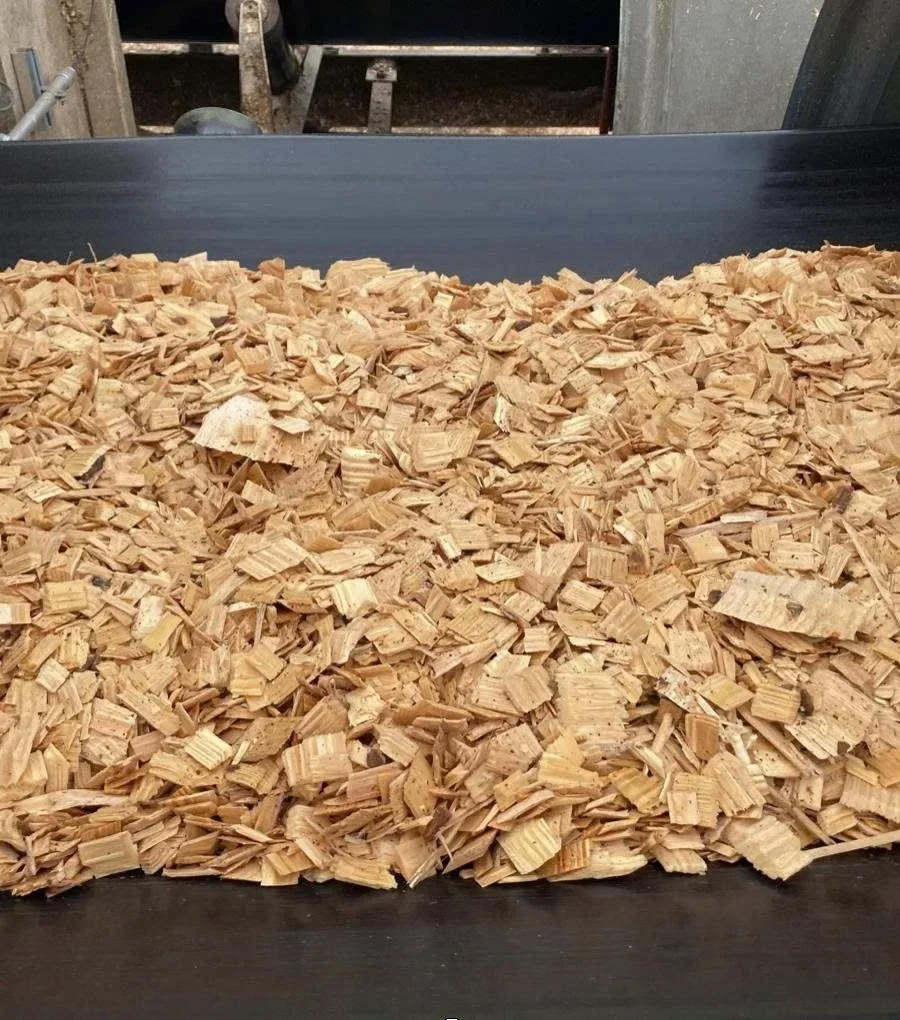
For residential and small commercial boilers, ISO 17225-4 uses three particle-size classes. At least 60% of the chips by mass must fall in the main fraction, and the standard also limits fines (below 3.15 mm) and oversized pieces.
| Class | Main fraction (≥ 60% by mass) | Suits |
|---|---|---|
| P16S | 3.15–16 mm | Small boilers with narrow augers |
| P31S | 3.15–31.5 mm | Most domestic and small commercial boilers |
| P45S | 3.15–45 mm | Larger boilers with robust feed systems |
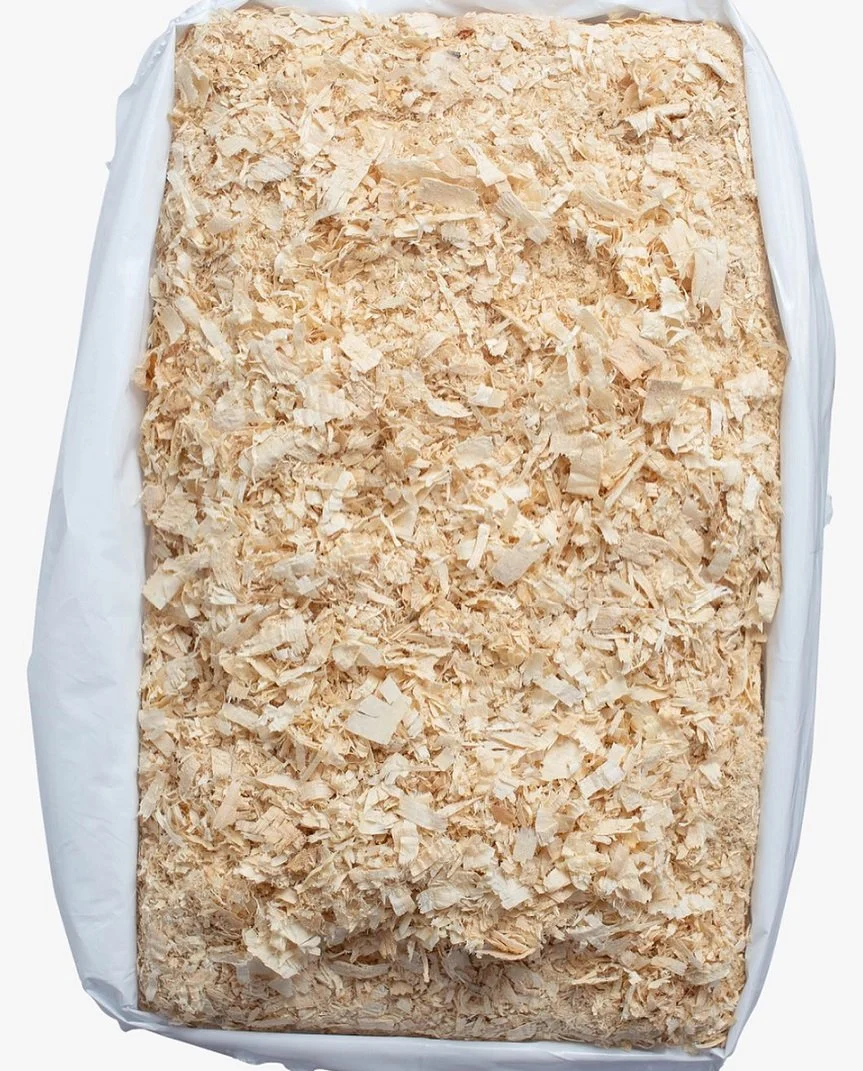
Too many fines raise dust and ash and slow drying; long slivers jam augers. Your boiler manual should state the accepted P class.
Ash and contamination
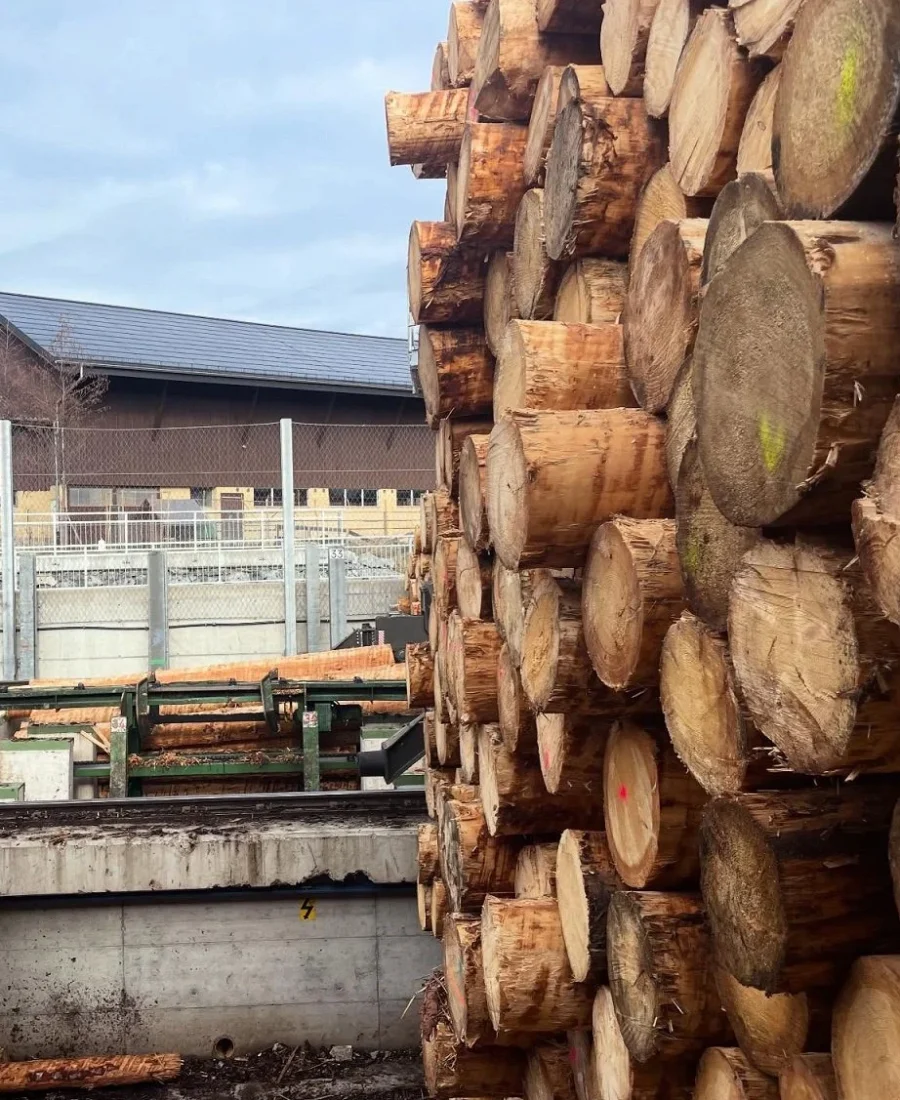
Ash comes mostly from bark, needles and soil picked up during harvest. LWF measured 0.4–1.7% ash in chips from energy roundwood but 0.8–5.4% in forest residues, and recommends only roundwood for A1 and A2. Higher ash means more emptying, more slag on the grate and more wear. Ask your supplier what raw material the chips come from and how they keep sand and stones out during chipping, transport and storage.
How to buy wood chips for biomass boilers in bulk
A guidance document published in June 2025, ISO/TS 17595, describes good practice for characterising wood chip fuels (ISO/TS 17595:2025). It suggests that operators of systems under 1 MW can ask their supplier for a third-party fuel quality declaration, and it ranks pricing methods: by energy content (needs moisture tests and a weighbridge) is most reliable, by weight needs a narrow moisture range, and by volume is least reliable.
- Specify the label, not a nickname: class, P, M and A, e.g. “A2, P31S, M35”.
- Agree the pricing unit: per MWh, per tonne at a stated moisture, or per loose m³. For conversions, klimaaktiv counts about 0.4 solid m³ of wood per loose m³ of chips (April 2023).
- Ask for test data: moisture by oven-drying, sieve analysis and ash, at least for the first loads.
- Plan delivery: bulk trucks need access to your silo or bunker; big bags suit smaller sites.
- Check traceability: origin and species, and documentation for EU deforestation rules where relevant.

Storage
Keep chips covered and protected from rain. Natural Resources Canada warns that piles with many fines absorb more water and can heat up and even self-ignite, and recommends minimising storage time. LWF found that storing chips in open piles dries them but can cost 20–40% of the dry matter; storing logs through the summer and chipping afterwards reduced moisture to about 31% with smaller losses.
Matching wood chips for biomass boilers to your system
The right specification depends less on the chips than on the boiler. Before comparing offers, collect three facts from the manufacturer’s manual or your installer: the accepted particle-size class, the maximum moisture content and any limits on ash or fines. Then match them to the label on the supplier’s declaration.
- Small domestic boilers (houses, small farms): usually A1 or A2 chips, P16S or P31S, low moisture. Stable quality matters more than the lowest price.
- Medium boilers (hotels, schools, greenhouses, small heat networks): often A2 or B1, P31S or P45S, with moisture as specified by the installer.
- Large plants above about 1 MW: usually work to their own contract specifications, as ETIP notes, and can burn wetter, coarser fuel.
When you change supplier, test a first load before committing to a whole season. Wood chips for biomass boilers that look alike can behave very differently in an auger: fines, slivers and wet patches show up within days. Keep a simple log of deliveries, moisture readings and any stoppages; it helps you negotiate and spot problems early. In the end, a good supply of wood chips for biomass boilers is about consistency from one truck to the next.
FAQ
What moisture should wood chips for biomass boilers have?
Follow your boiler manufacturer. As a rule, small boilers need below 30% (often M25 or M35 classes), while large plants above about 400 kW can burn wetter chips.
What is the difference between P16S and P31S chips?
The main fraction: P16S is 3.15–16 mm, P31S 3.15–31.5 mm. Smaller boilers usually need the finer class.
Should I buy wood chips by m³ or by tonne?
By energy or by tonne at a stated moisture is fairer. Volume is the least reliable because bulk density varies with species, moisture and settling.
Are A1 chips worth the premium?
For small domestic boilers, yes: low ash and moisture mean fewer breakdowns. Large plants built for B-grade fuel do not need A1.
4 Wood Lda supplies wood chips in bulk or big bags from Pedrógão Grande, alongside other biomass and wood products, for delivery in Portugal, Europe and beyond. Tell us your boiler type, required class and annual volume and we will reply with availability and price — request a quote or message us on WhatsApp at +351 966 799 273.
Sources and references
- ISO 17225-4:2021 Solid biofuels – Graded wood chips (preview) ISO (via iTeh), February 2021
- Solid Biofuels Bulletin No. 6: Graded wood chips Natural Resources Canada, n.d.
- ISO/TS 17595:2025 Characterization of wood chip fuels ISO (via iTeh), June 2025
- Wood chips ETIP Bioenergy, n.d.
- Quality of forest wood chips LWF / waldwissen.net, May 2021
- Merkblatt 12: Der Energieinhalt von Holz LWF Bayern, November 2024