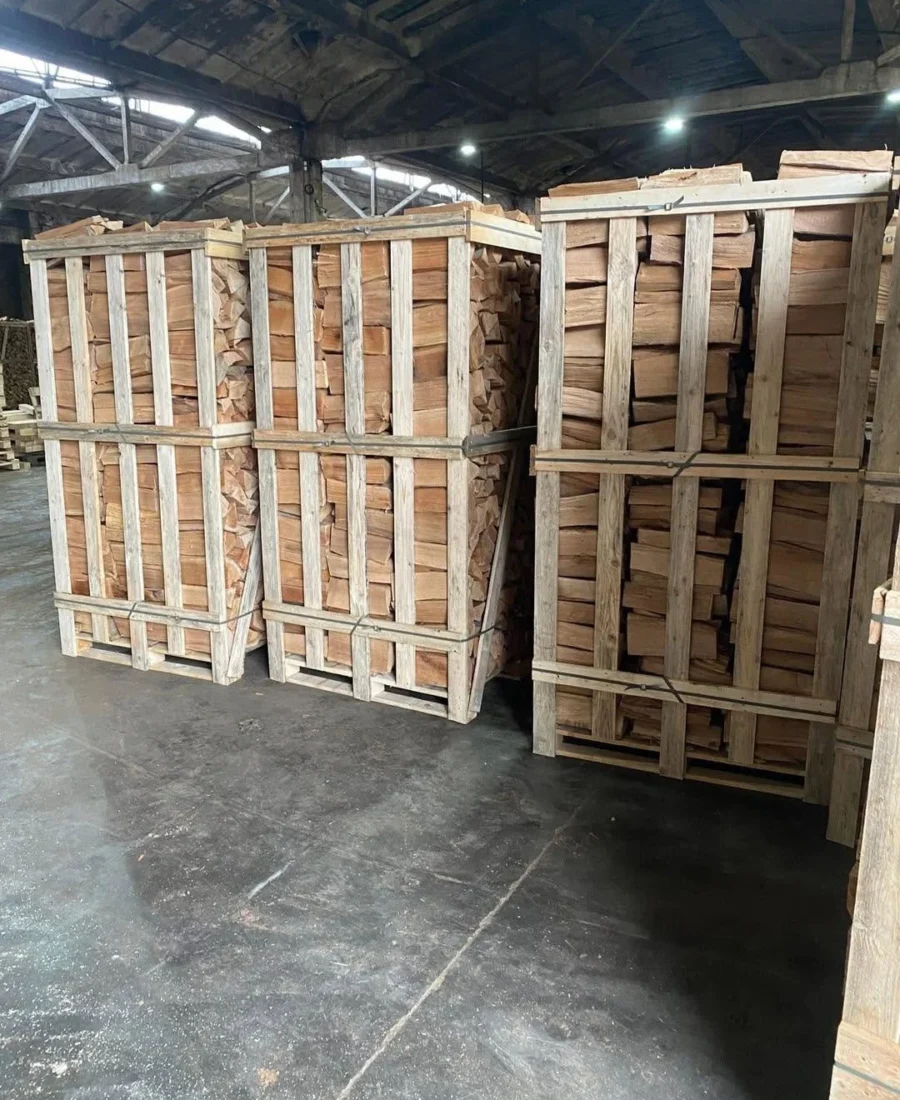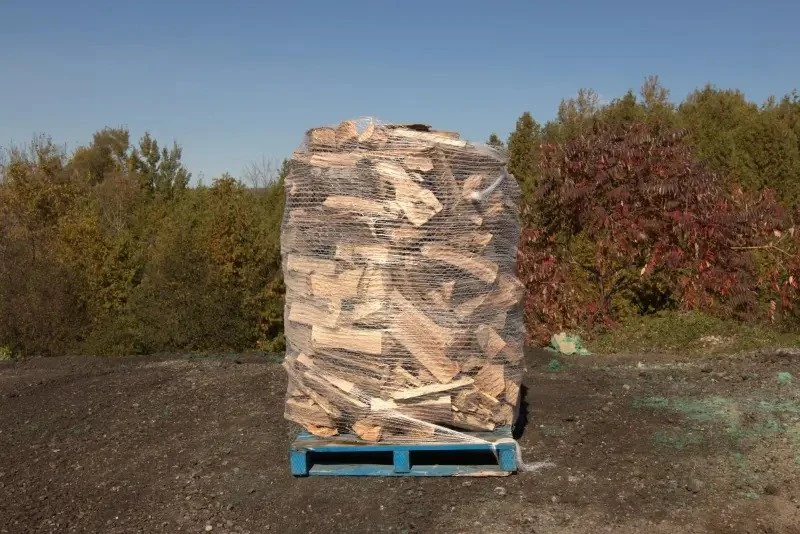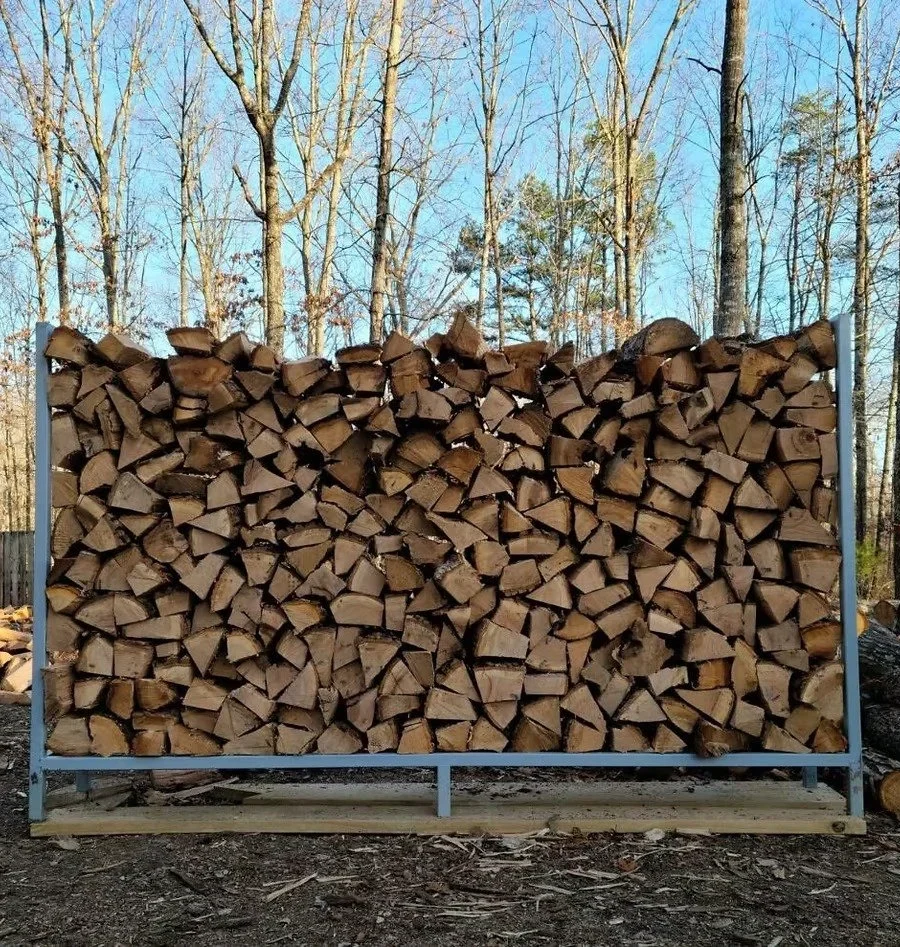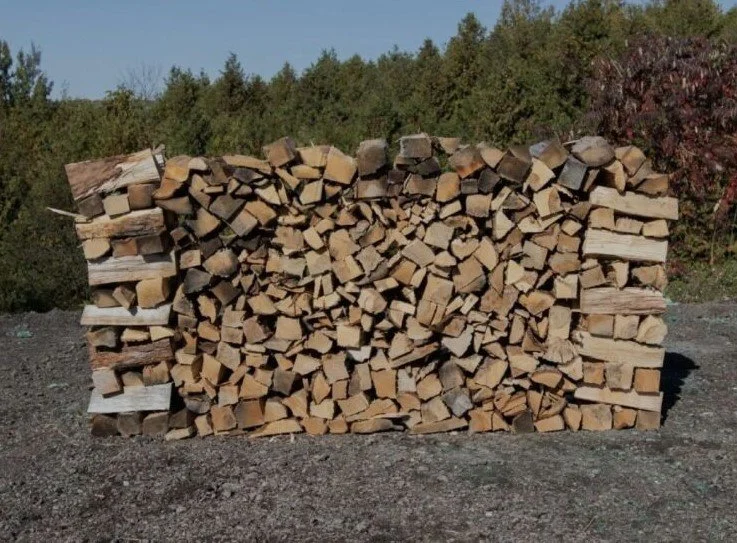

Wood briquettes vs firewood is a question more and more stove owners ask when autumn comes: is it worth swapping a pile of split logs for neat packs of pressed sawdust? Both are wood, both burn in the same stove, but they behave very differently when it comes to moisture, energy per kilo, storage space and ash. This guide compares them with figures from forestry and standards bodies and helps you decide who should switch — and who is better off staying with logs.
What wood briquettes are: RUF and Pini Kay
Wood briquettes are made by compressing dry sawdust and shavings under very high pressure. The heat and pressure release the wood’s own lignin, which binds the briquette, so good briquettes need no glue. Two formats dominate in Europe:
- RUF briquettes are rectangular blocks pressed in a hydraulic press. They stack like bricks and are easy to dose.
- Pini Kay briquettes are extruded, usually with a hole through the middle. They are very dense and burn steadily, with the hole helping air circulate.
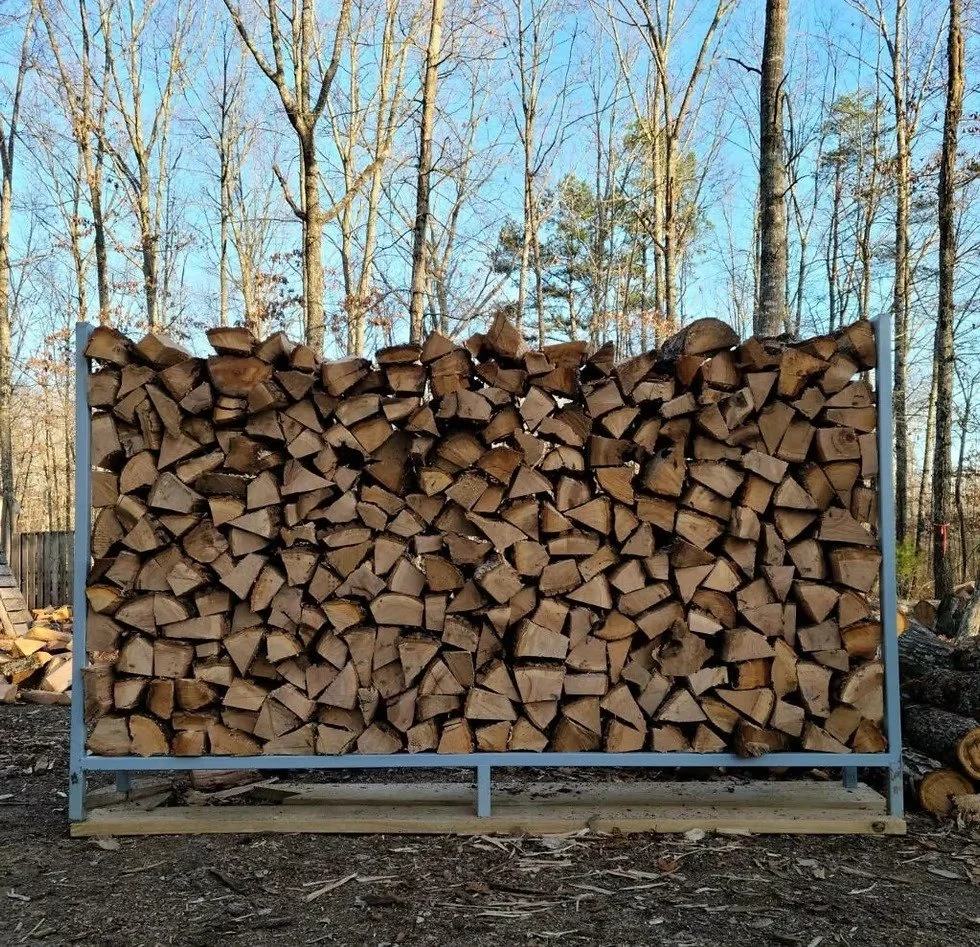
Firewood, by contrast, is a natural product: logs that have to be cut, split and then dried — by air over months, or in a kiln — before they burn well.
Moisture: the biggest difference
Moisture determines almost everything about how wood burns. According to the FAO Wood Fuels Handbook (2015), freshly cut timber contains 50–60% water, while air-dried wood reaches 15–20% at the end of natural drying. For household use, the handbook recommends logs with no more than 25–30% water, and no more than 25% for small heating systems. With proper storage this takes less than a year; in sunny positions, trials in Slovenia dried firewood in under six months.
Briquettes start from material that is already dry. The DINplus certification scheme for wood briquettes, based on EN ISO 17225-3 class A1, allows a maximum of 12% moisture (DIN CERTCO, May 2023). In other words, a good briquette is drier than even well-seasoned firewood, and it stays that way if you keep it in its packaging.
Why it matters: water has to be evaporated before wood can burn. The FAO handbook estimates that each 10-point drop in moisture adds roughly 0.6 kWh of energy per kilo. Wet logs give less heat, more smoke and more soot in the chimney.
Wood briquettes vs firewood: energy, space and ash compared
| Criterion | Wood briquettes (EN ISO 17225-3 A1) | Firewood (logs) |
|---|---|---|
| Moisture | ≤ 12% | 50–60% fresh; 15–20% when air-dried |
| Net calorific value | ≥ 4.3 kWh/kg (15.5 MJ/kg) | About 4.1 kWh/kg at 20% moisture |
| Ash | ≤ 1.0% (dry) | 0.2–0.5% for bark-free wood; bark much higher |
| Energy per stacked m³ | High: dense, regular shape, little air | 1,400–2,000 kWh per m³ at 20% moisture |
| Ready to burn | On delivery | After seasoning, unless kiln-dried |
| Handling | Clean packs, uniform pieces | Irregular logs, bark, insects, dirt |
Sources: DIN CERTCO DINplus scheme (May 2023); Forest Research, typical calorific values (February 2022); FAO Wood Fuels Handbook (2015).
Energy density
Per kilo, the difference is modest: certified briquettes deliver at least 4.3 kWh/kg, while air-dry logs at 20% moisture give around 4.1 kWh/kg according to Forest Research. The real gap appears with firewood that is not properly dry — the FAO handbook gives about 3.4 kWh/kg for wood stored only one summer, at 25–35% water.
Storage space
Per cubic metre, briquettes win clearly. Firewood stacked in a shed holds a lot of air between the logs; Forest Research puts stacked air-dry logs at 1,400–2,000 kWh per m³. Briquettes have a particle density of at least 1.0 g/cm³ under the DINplus scheme and stack tightly, so the same heat fits in a much smaller corner. For a flat, a terraced house or a café with a stove, that is often the deciding factor.
Ash
Clean, bark-free wood has very little ash — 0.2–0.5% according to the FAO — but bark is much higher, at roughly 2–10%. Logs always carry some bark. Briquettes made from bark-free sawdust are capped at 1.0% ash under A1, so in practice both fuels leave little ash when the quality is right.
Burning behaviour and air quality
Briquettes catch more slowly than kindling-sized wood, then burn long and steadily; many users mix them, using logs or kindling to start the fire and briquettes to hold it. Pini Kay briquettes are especially long-burning. Because they are dry and uniform, briquettes also help a stove burn cleanly, which matters: the European Commission’s Joint Research Centre reported in January 2025 that heating and cooling account for 73% of EU PM2.5 emissions, with the residential sector responsible for 85% of the PM2.5 emitted by heating (JRC).
Dry fuel in a closed stove is part of the answer. The Portuguese consumer association DECO also rates open fireplaces as low-efficiency and recommends stoves or heat recuperators (DECO PROteste, October 2025).
Who should switch, and who should stay with logs
Good candidates for briquettes
- Homes with little storage space: flats, townhouses, holiday homes.
- Stove owners who buy late in the season and keep ending up with damp logs.
- Shops and petrol stations that want a clean, stackable product to sell in winter.
- Anyone who wants predictable, long burns overnight.
When firewood still makes sense
- Rural homes with a dry, ventilated woodshed and space to season a year ahead.
- Buyers who value the look and crackle of a log fire.
- Wood-fired ovens and appliances designed for logs.
For many households, the best answer to wood briquettes vs firewood is both: seasoned firewood for lighting and ambience, wood briquettes for long, steady heat.
Buying tips: what to ask your supplier
When you compare offers for wood briquettes vs firewood, compare like with like: the price per unit of heat delivered, not per pallet or per cubic metre. Ask your supplier:
- What is the moisture content at delivery, and is the firewood air-dried or kiln-dried?
- Are the briquettes pressed without glue or additives, and from which wood?
- How many kilos are on a pallet, and how is it protected from rain?
- Is the firewood cut and split to a length that fits my stove?
- Which delivery terms apply (EXW, FCA or DAP), and is unloading included?
A simple rule for pricing wood briquettes vs firewood: divide the delivered price by the kilos you receive, then divide again by the kWh per kilo. Damp logs that look cheap per cubic metre often cost more per unit of heat than dry briquettes.
FAQ
Do wood briquettes burn longer than firewood?
Generally yes, particularly dense Pini Kay briquettes. They are drier and more compact than logs, so they burn steadily for longer once lit.
Are wood briquettes made with glue?
Quality RUF and Pini Kay briquettes are pressed from dry sawdust without glue; the wood’s natural lignin holds them together. Ask your supplier to confirm.
Can I burn briquettes in an open fireplace?
Yes, but like any wood fuel they are far more efficient in a closed stove or a fireplace with a heat recuperator.
How should briquettes be stored?
Keep them dry, in their packaging and off the floor. Briquettes that absorb moisture swell and crumble.
Still weighing up wood briquettes vs firewood? 4 Wood Lda supplies RUF and Pini Kay briquettes pressed from sawdust without glue, as well as firewood, by pallet or full truck for Portugal and Europe. Prices are on request: send us your quantities through the quote form, check our shipping options or message us on WhatsApp at +351 966 799 273.
Sources and references
- Wood Fuels Handbook FAO, 2015
- Certification Scheme Wood Briquettes – DINplus (based on DIN EN ISO 17225-3) DIN CERTCO, May 2023
- Typical calorific values of fuels Forest Research, February 2022
- Air pollution from heating and cooling: stepping up clean energy use urgently needed European Commission Joint Research Centre, January 2025
- Aquecimento: lareiras a lenha são mais eficientes? DECO PROteste, October 2025