How much firewood for winter do you actually need? Order too little and you end up buying wet wood at peak prices in January; order too much and it takes over the garden. This guide explains the units — cord, stacked m³ (stere), loose m³ and tonnes — how to convert between them, and a simple method to estimate a household’s needs.
The units: cord, stere, loose m³ and tonne
Firewood is sold by four very different measures, and confusing them is the most common reason buyers feel short-changed.
- Solid m³: one cubic metre of wood with no gaps. Used by foresters, rarely for retail.
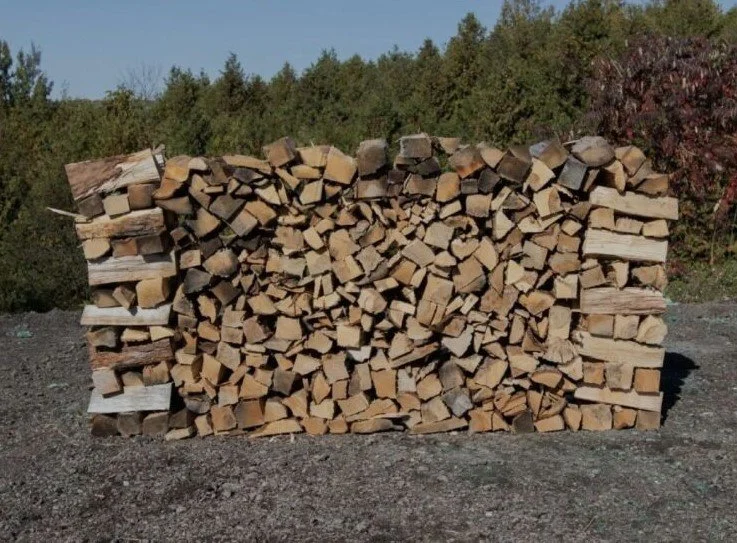
- Stacked m³ or stere: logs stacked neatly to fill one cubic metre, air gaps included (klimaaktiv, April 2023).
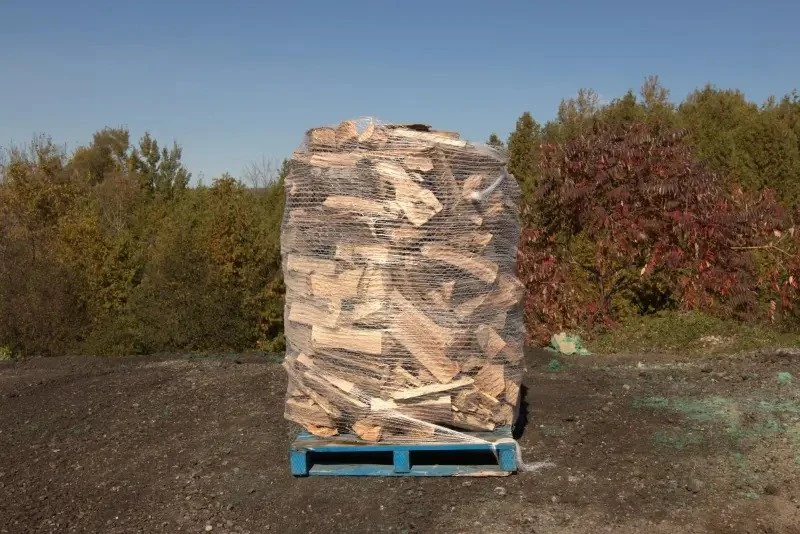
- Loose m³: split logs tipped loosely into a one-cubic-metre space, with much more air.
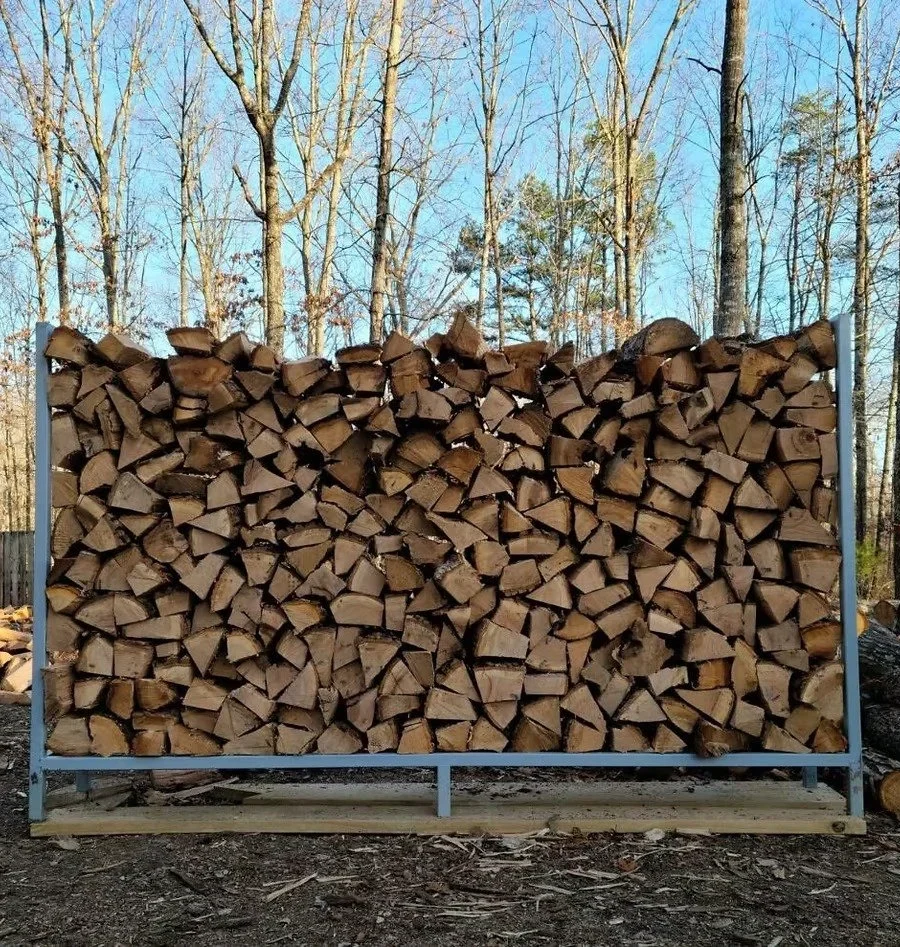
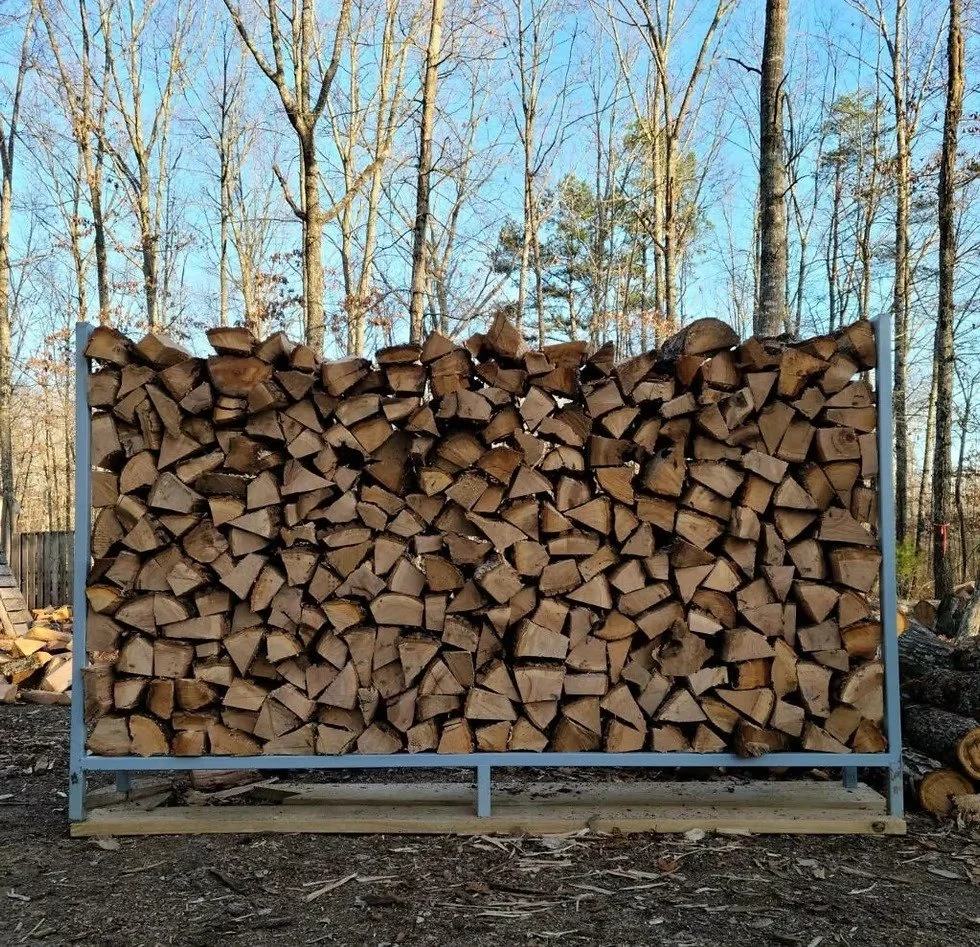
- Cord: a stack of 4 × 4 × 8 feet, about 3.6 m³, of which roughly 70% is solid wood (Natural Resources Canada).
- Tonne: common in Portugal; fair only if you know the moisture, because water is heavy.
Conversion table
The Bavarian forestry institute LWF uses about 0.7 solid m³ per stacked m³ and 0.45–0.5 solid m³ per loose m³ of split logs, and publishes energy contents at 20% water content (Merkblatt 12, November 2024). Rounded:
| Unit | Equivalent | Oak, kWh (20% water) | Pine, kWh (20% water) |
|---|---|---|---|
| 1 solid m³ | ≈ 1.4 stacked m³ ≈ 2.1 loose m³ | 2,755 | 2,166 |
| 1 stacked m³ (stere) | ≈ 0.7 solid m³ ≈ 1.4–1.5 loose m³ | 1,929 | 1,516 |
| 1 loose m³ (33 cm split) | ≈ 0.45–0.5 solid m³ | 1,377 | 984 |
| 1 cord (≈ 3.6 stacked m³) | ≈ 2.5 solid m³ | ≈ 6,900 | ≈ 5,450 |
| 1 tonne (20% water) | ≈ 2 stacked m³ of oak | 3,860 | 4,020 |
Two things stand out. First, a loose m³ holds about a third less wood than a stacked one, so a cheap “m³” price may simply be a loose m³. Second, a cubic metre of dense oak carries about 25% more energy than the same volume of pine.
How much firewood for winter: a three-step estimate
Step 1: estimate the heat you want from the stove
Multiply the average output you run the stove at by the hours of use per day and the number of heating days. Example: a stove running at about 4 kW for 6 hours a day over 150 days delivers 4 × 6 × 150 = 3,600 kWh of heat.
Step 2: allow for your appliance’s efficiency
No appliance turns all of the wood’s energy into room heat. Check the efficiency on your stove’s label or manual. If it states 75%, the wood must supply 3,600 ÷ 0.75 = 4,800 kWh. An open fireplace loses far more heat up the chimney — DECO PROteste rates open fireplaces as low-efficiency — so you will need considerably more wood for the same comfort.
Step 3: convert to your unit
Divide by the energy per unit from the table: 4,800 kWh ÷ 1,929 ≈ 2.5 stacked m³ of dry oak (about 0.7 of a cord, or roughly 1.25 tonnes), or 4,800 ÷ 1,516 ≈ 3.2 stacked m³ of dry pine. Add 10–20% as a buffer for a cold spell.
If you heated with wood last year, the simplest check is your own history: how many crates, cords or tonnes did you burn, and was the winter mild or harsh? Adjust from there.
Rules of thumb by household type
Every house is different, so treat these only as starting points to check against the method above:
- Occasional evening fires in a living room: count the evenings and hours; a crate or half a cord often lasts a long time.
- Main heating in the evenings and weekends with a closed stove or insert (recuperador): use the three-step estimate with your real hours.
- Whole-house heating with a log boiler or several stoves: work from your annual heat demand or past fuel bills, and plan for several cords.
Moisture changes the maths
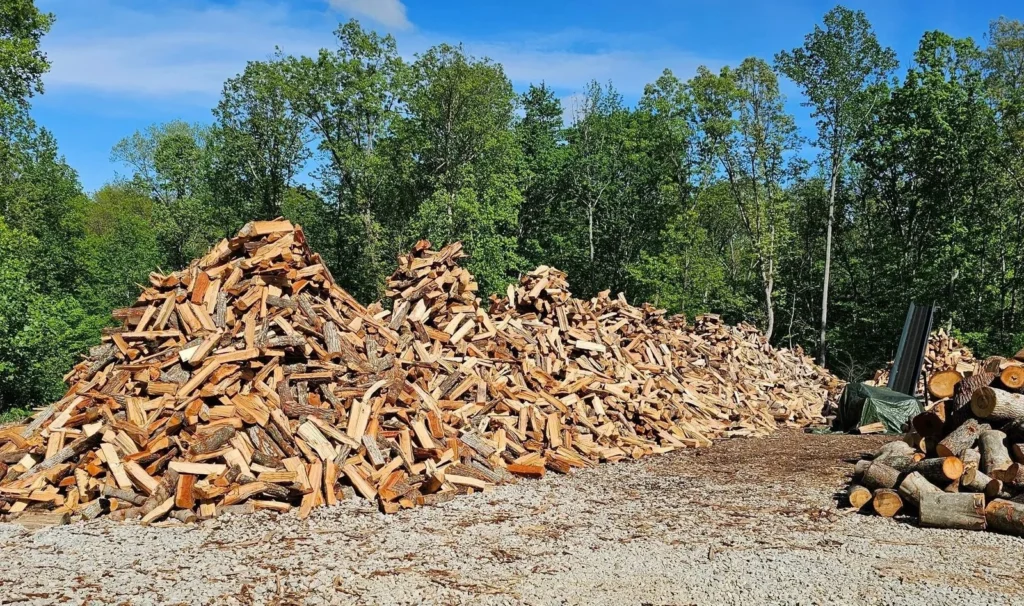
Everything above assumes dry wood. LWF puts hardwood at 3.86 kWh per kg at 20% water content but only 2.16 kWh per kg at 50%, typical of fresh-cut wood. If you buy green wood to burn this winter, you would need far more of it — and it would smoke. Buy green wood only for next year, and buy kiln-dried or properly seasoned firewood for now.
Storage space
One cord is about 3.6 m³ of stacked logs: for example a stack 1.2 m high, 1 m deep and 3 m long. Keep it off the ground, covered on top, open at the sides, and at least 10 cm from walls, as the LWF recommends (Merkblatt 20, July 2025).
Common mistakes when working out how much firewood for winter
- Comparing a loose m³ with a stacked m³. A loose m³ holds roughly a third less wood, so check which one a quote refers to.
- Counting tonnes of wet wood as if they were dry. A tonne of green wood contains far less usable heat than a tonne at 20% water content.
- Forgetting the shoulder seasons. Cool evenings in October and April add up; include them in your heating days.
- Ignoring log size. Logs too long for the firebox have to be cut again, and very thick logs burn poorly in small stoves.
- Leaving it too late. Suppliers interviewed by Jornal de Notícias (October 2026) said most firewood sells once the cold arrives, when dry stock is scarcer.
A careful estimate of how much firewood for winter you need, plus a modest buffer, is cheaper than emergency top-ups of whatever wood is left in January. If you are unsure, start with an order of dry wood for the coldest months and note how fast you burn it: after one season you will have your own reliable figure for how much firewood for winter your home really uses.
FAQ
How much firewood for winter does an average home use?
There is no reliable single figure: it depends on climate, insulation, appliance and hours of use. Use the three-step method above with your own hours and efficiency.
How many m³ are in a cord of firewood?
About 3.6 stacked m³, of which around 2.5 m³ is solid wood.
How many stacked m³ are in a tonne of firewood?
For dry oak, roughly 2 stacked m³ per tonne; for lighter species such as pine, more. Wet wood gives fewer m³ per tonne.
Is it better to order everything at once?
If you have dry storage, yes: ordering before the cold arrives gives better choice and drier stock, and one delivery costs less than several.
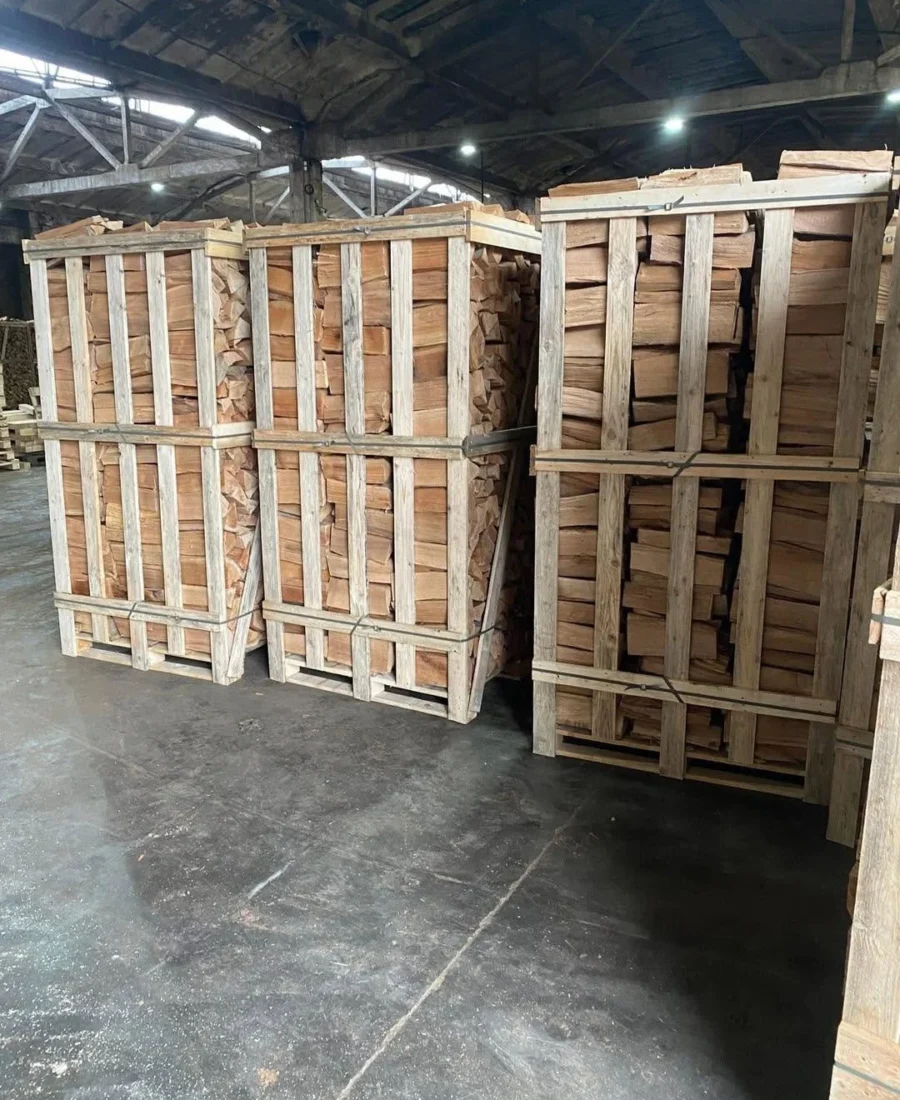
Once you know how much firewood for winter you need, we can quote the exact quantity. 4 Wood Lda supplies firewood in kiln-dried crates of about 1.8 m³, seasoned and green cords of about 3.6 m³, and bulk truck loads. Request a quote or send us a WhatsApp message on +351 966 799 273.
Sources and references
- Merkblatt 12: Der Energieinhalt von Holz LWF Bayern, November 2024
- Umrechnungsfaktoren für Energieholzsortimente bei Bilanzberechnungen klimaaktiv / Austrian Ministry for Climate Action, April 2023
- Solid Biofuels Bulletin No. 7: Graded firewood Natural Resources Canada, n.d.
- Merkblatt 20: Scheitholz LWF Bayern, July 2025
- Aquecimento: lareiras a lenha são mais eficientes? DECO PROteste, October 2025