

BBQ pellets look almost identical to the wood pellets people burn in stoves, but they are bought for a completely different reason: flavour. In a pellet grill or smoker the pellets are both the heat source and the seasoning, so the wood species, its purity and how it is made matter as much as the cut of meat. This guide explains which woods give which flavours, what “food grade” should mean in practice and why heating pellets do not belong in a grill.
What BBQ pellets are and how they work
Like heating pellets, BBQ pellets are sawdust or wood shavings dried and pressed through a die, usually into 6 mm cylinders. The heat and pressure soften the lignin naturally present in wood, which binds the pellet without glue. In a pellet grill, an auger feeds pellets into a small fire pot, a fan keeps them burning and a controller adjusts the feed rate to hold the set temperature. At low temperatures the wood smoulders and produces more smoke; at high temperatures it burns hotter and cleaner, giving less smoke flavour.
Pellets are also used in a growing range of other equipment: tube smokers inside charcoal or gas grills, smoking boxes and pellet-fired pizza ovens. In every case, the wood species decides the flavour.
Wood species and flavours in BBQ pellets
Food scientists have long recommended hardwoods for smoking. A Pacific Northwest Extension guide from Oregon State, Washington State and Idaho universities lists maple, oak, alder, hickory, birch and fruit woods as good smoking woods, and advises against conifers such as fir, spruce, pine and cedar for smoking fish because they leave an unpleasant taste (PNW 238, Smoking Fish at Home – Safely). The flavour notes below are the general consensus among pitmasters; your own taste test is the final judge.
| Wood | Flavour profile | Pairs well with |
|---|---|---|
| Oak | Medium, rounded smoke; the all-rounder | Beef, lamb, pork, sausages, game |
| Maple | Mild, slightly sweet | Poultry, pork, vegetables, cheese |
| Alder | Light and delicate | Salmon and other fish, seafood, chicken |
| Hickory | Strong, bacon-like | Pork shoulder, ribs, brisket |
| Fruit woods (apple, cherry) | Mild, fruity; cherry adds colour | Pork, poultry, ham |
| Pine and other softwoods | Resinous; not suited to slow smoking | High-heat grilling where pellets act mainly as fuel |
Oak, maple and alder: the European workhorses
Oak gives a smoke that is noticeable but never bitter, which is why it is the base of many blends. Maple is gentler and slightly sweet, ideal when you want colour and aroma without masking delicate meat. Alder is the classic wood for salmon, light enough for fish and chicken.
Where pine grill pellets fit
Softwood pellets burn hot and clean, which makes them useful as a heat source for fast, high-temperature grilling. For low-and-slow smoking, where the food spends hours in the smoke, choose hardwood pellets so that resinous flavours do not reach the meat.
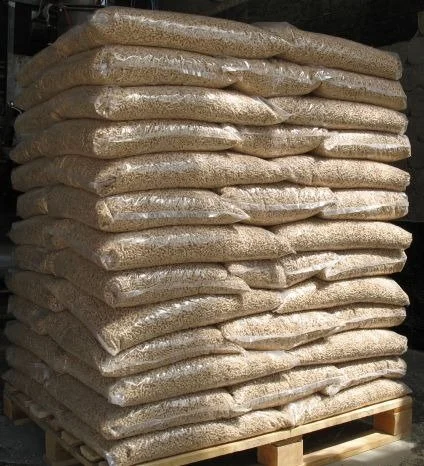
BBQ pellets vs heating pellets: why they are not interchangeable
Heating pellets are designed and certified for burning in stoves and boilers. The ENplus A1 class, the most common heating-pellet certificate in Europe, sets limits such as 6 or 8 mm diameter, at most 10% moisture, at most 0.7% ash and at least 4.6 kWh/kg net calorific value, and it allows up to 2% additives, of which up to 0.2% may be added after production, for example coating oils (ENplus G1, 2018). Those rules are about burning performance and emissions in heating appliances, not about food.
The wood mix differs too. A 2024 study of 28 ENplus A1 pellets found that the share of deciduous (hard) wood was one of the parameters most linked to particle emissions in pellet stoves, because hardwood usually contains more potassium (Mack et al., Biomass Conversion and Biorefinery, 2024). Heating-pellet producers therefore tend to favour softwood, while BBQ pellet buyers want hardwood for flavour. Two products, two opposite priorities.
- Heating pellets: optimised for heat output, low ash and stove reliability; species rarely declared.
- BBQ pellets: optimised for flavour; species declared on the bag; should be 100% wood with nothing added that you would not want near food.
Food-grade considerations for BBQ pellets
There is no single EU “food-grade pellet” certificate, so buyers should check the basics themselves:
- Clean raw material: virgin sawdust from untreated wood only — no recycled, painted, glued or chemically treated timber.
- No unwanted additives: pellets pressed with the wood’s own lignin, without glue; ask whether any oil or flavouring has been added.
- Declared species: “oak” should mean oak. Ask what percentage of the declared species the pellet contains.
- Dry, low-dust pellets: damp or crumbly pellets burn erratically, jam augers and produce more smoke.
- Cooking practice: Ireland’s food safety authority notes that PAHs form when fat drips onto a flame and recommends avoiding direct flame contact and charring (FSAI). Good pellets help, but technique matters too.
Why demand for real-wood smoking is growing
In April 2024, EU Member States endorsed the Commission’s proposal not to renew the authorisation of eight smoke flavourings after EFSA could not rule out genotoxicity concerns. The phase-out periods are five years where the flavourings replace traditional smoking, for example on hams, fish and cheese, and two years for other uses such as soups, crisps and sauces (European Commission, April 2024). For restaurants, delis and small food producers that want a genuine smoky taste, real wood smoke from BBQ pellets is one practical route.
Tips for resellers
- Stock a mild wood (maple or alder) and a medium one (oak) before adding speciality blends.
- Put the species, pairing suggestions and “100% wood” clearly on the shelf label.
- Keep pellets dry and off the floor; humidity in a shop or garage ruins them.
FAQ
Can I use heating pellets in a pellet grill?
It is not recommended. Heating pellets are certified for stoves, may contain permitted additives and usually do not declare the wood species. Use pellets sold for cooking.
Which BBQ pellets are best for fish?
Alder is the classic choice for salmon and other fish; maple also works well. Both give a light smoke that does not overpower delicate flesh.
Are oak BBQ pellets good for beef?
Yes. Oak gives a medium, rounded smoke that suits beef, lamb and sausages, and it is a good all-round choice if you stock only one wood.
How should BBQ pellets be stored?
In a dry place, in a closed bag or container, off the floor. Pellets that absorb moisture swell, crumble and feed badly.
4 Wood Lda supplies BBQ pellets of oak, maple and alder, plus pine grill pellets, for retailers, restaurants and distributors in Portugal, Europe and the UAE, by pallet, full truck or container. Prices are on request: send your quantities through the quote form, see our shipping options or message us on WhatsApp at +351 966 799 273.
Sources and references
- Smoking Fish at Home – Safely (PNW 238) Pacific Northwest Extension (OSU, WSU, University of Idaho), May 2003 reprint
- ENplus G1: Pellets Bag Design – Requirements (quality class table) ENplus / European Pellet Council, 2018
- Quality range of ENplus A1 certified wood pellets and their combustion behavior Biomass Conversion and Biorefinery (Springer), December 2024
- Member States endorse withdrawal of 8 smoke flavourings European Commission, DG SANTE, April 2024
- Polycyclic Aromatic Hydrocarbons (PAHs) in Food Food Safety Authority of Ireland, accessed November 2026
